

 Facebook
 X
X
 Pinterest
 Copy Link
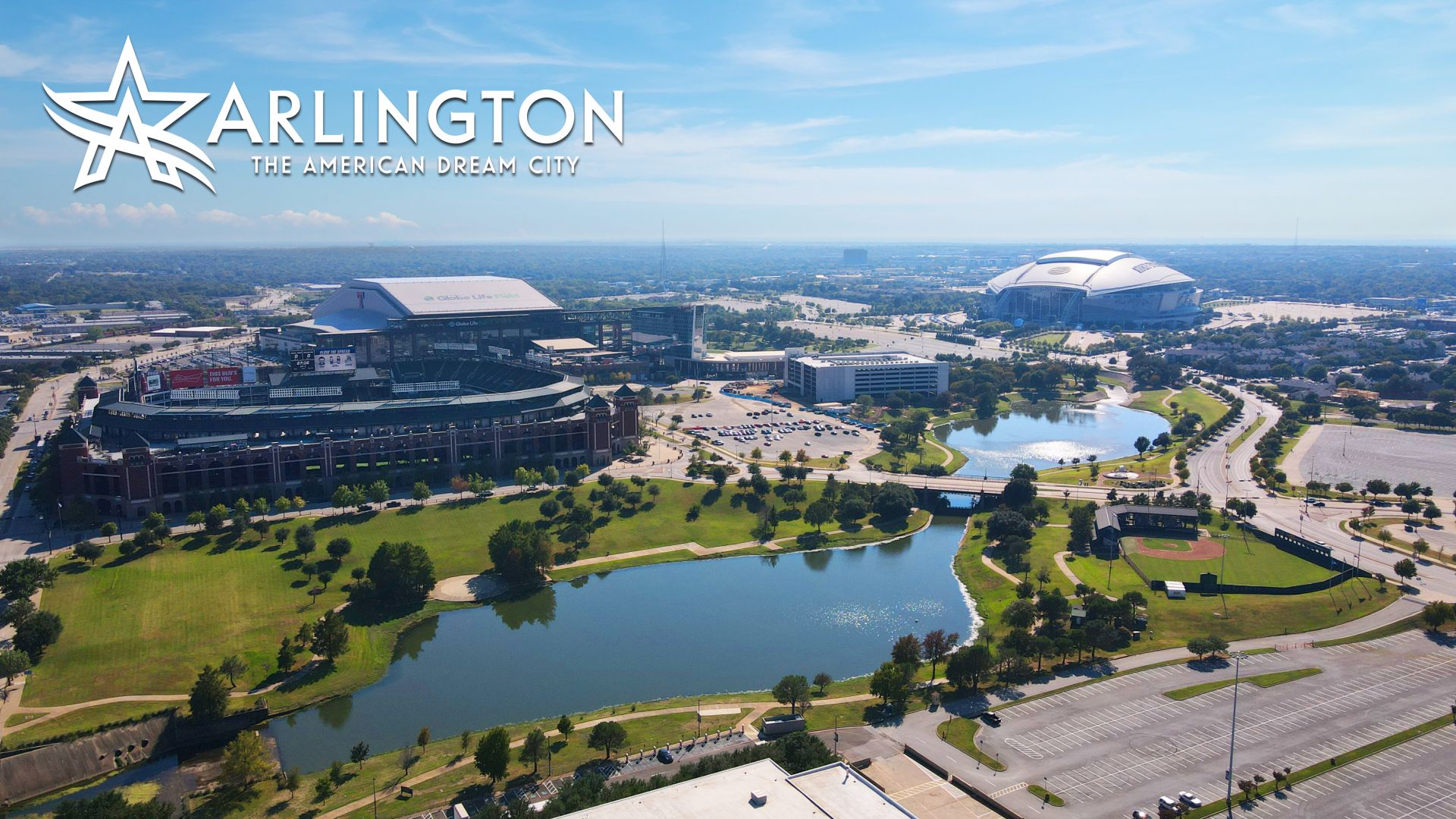
If you are thinking about moving to Arlington, it is a smart question to ask: what are the pros and cons of living in Arlington, Texas?
My honest take is that Arlington has a lot going for it, but it also comes with trade-offs. Overall, I think Arlington works really well for a lot of buyers because it offers location, entertainment, parks, diversity, and a lot more day-to-day convenience than people sometimes expect. At the same time, it is a real city, not a quiet small suburb, and that matters too.
The Pros of Living in Arlington
1. Arlington gives you a central DFW location
One of Arlington’s biggest practical advantages is where it sits. It is right in the middle of the Metroplex, which is a big reason so many people keep it on their radar. You get access to both Dallas and Fort Worth without necessarily needing to live in either downtown, and that central location is a real plus for buyers who want to stay connected to more of DFW. The city’s official facts page also notes Arlington covers about 99.5 square miles, so there is real room and variety within the city itself.
2. There is a lot to do here
This is probably one of Arlington’s most obvious strengths. The Entertainment District is a major part of the city’s identity and economy, and the city says it helps support core services while reinforcing Arlington’s reputation as a destination. Between AT&T Stadium, Globe Life Field, Texas Live!, Six Flags, concerts, sports, and events, Arlington gives residents access to more activity than a lot of nearby cities can offer.
3. Parks and trails are a real strength
This is one of Arlington’s biggest wins in my opinion. The city says it has more than 5,600 acres of park land, 123 miles of trails, four municipal golf courses, and more than 160 outdoor sports and practice fields. River Legacy Park alone is listed by the city at 1,031 acres, and Arlington calls it the crown jewel of the parks system. That is a lot of outdoor value for people who want more than just a house and a commute.
4. Arlington has real variety
One thing I like about Arlington is that it is not one-note. You can find established neighborhoods, newer communities, areas closer to downtown, pockets near the Entertainment District, and more outdoor-oriented sections of the city. Arlington also continues to get recognized for diversity. The city announced that WalletHub ranked Arlington No. 3 among the most diverse large U.S. cities in 2026, which gives some context for the city’s broad mix of people and neighborhoods.
5. Downtown gives the city some local character
Arlington is not just stadiums and highways. Downtown Arlington has become a real part of the city’s appeal. Downtown Arlington’s official site describes it as a revitalized district with local restaurants, arts, events, and community activity, and the city has also highlighted ongoing downtown investment like the Urban Union expansion and additional mixed-use growth. That gives Arlington a little more identity than a place that is only known for major attractions.
The Cons of Living in Arlington
1. Traffic is part of the deal
This is probably the biggest downside for some buyers. Arlington’s location is a strength, but being in the middle of everything also means dealing with traffic, event congestion, and busy roads. The city and TxDOT are in the middle of major transportation work tied to the $2.1 billion Southeast Connector Project, and Arlington has also reported large street maintenance efforts across the city. That kind of investment is good in the long run, but in the short run it can absolutely affect daily driving.
2. It feels like a city, not a tucked-away suburb
For some buyers, that is a pro. For others, it is not. Arlington is large, active, and busy. The city is on the edge of surpassing 400,000 residents, and with that scale comes more activity, more density in some areas, and more of a true city feel than buyers sometimes expect. If someone wants something slower, quieter, and more uniformly suburban, Arlington may feel a little bigger and busier than what they had in mind.
3. The experience can vary a lot depending on where you are
This is not really a flaw so much as a reality of a city this size. Arlington has a lot of different sections, and they do not all feel the same. That can be a strength because it gives buyers options, but it also means you really need to pay attention to neighborhood fit, commute patterns, and what kind of environment you want day to day. In a city spread across nearly 100 square miles, the answer to “how does Arlington feel?” can depend a lot on what part of Arlington you are talking about.
So, Is Arlington Worth It?
For a lot of people, yes.
If you want a city with strong park access, major entertainment, diversity, downtown activity, and a central location in DFW, Arlington has a lot going for it. The trade-off is that you are getting a larger, busier city experience with traffic, road work, and more variation from one part of town to another. Personally, I think that balance works well for a lot of buyers because Arlington gives you a lot of options without making you feel cut off from the rest of the Metroplex.
Final Thoughts
The pros of living in Arlington are pretty clear: location, parks, entertainment, diversity, and more neighborhood variety than a lot of people expect. The cons are real too: traffic, construction, and the fact that Arlington feels more like a full city than a sleepy suburb.
That is why I usually tell people Arlington makes a lot of sense if they want convenience, activity, and options. It is not perfect, and it is not trying to be tiny, but for a lot of buyers it is a really solid place to live.
Have questions? Reach out to Josh Johnson at josh@sarahpadgett.com.


